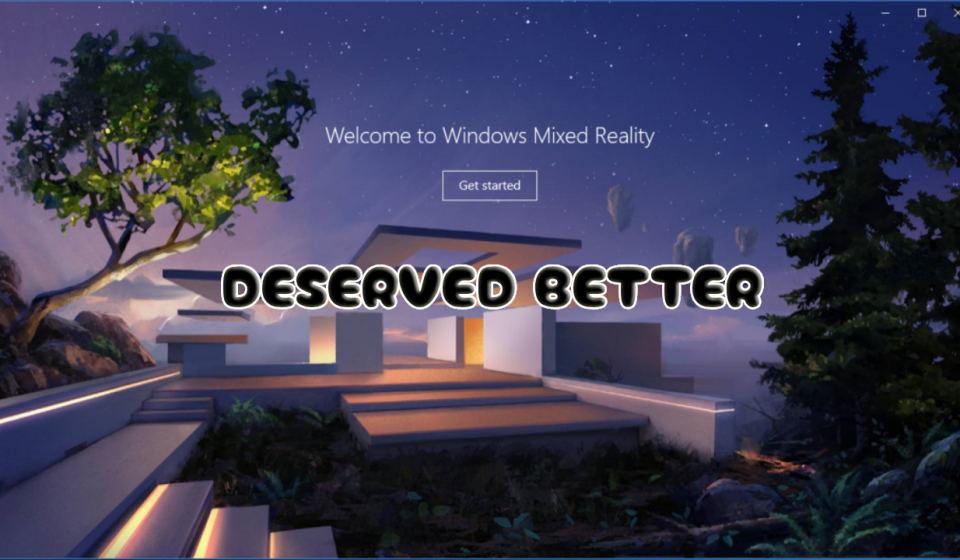

Remember Windows Mixed Reality?
For a while, it genuinely seemed like Microsoft might become a major player in VR. Windows Mixed Reality was built directly into Windows, and manufacturers like Samsung, Dell, Lenovo, Acer, and HP all jumped aboard with their own headsets.
And honestly? It was pretty damn cool.
One of the biggest advantages was inside-out tracking. You didn’t need to set up a bunch of sensors around your room just to play VR. Plug in the headset, grab the controllers, and you were pretty much ready to go.
Headsets like the Samsung Odyssey+ and eventually the HP Reverb G2 showed that WMR could offer some seriously good VR hardware, and SteamVR support meant you weren’t completely trapped inside Microsoft’s ecosystem.
Was it perfect? Hell no.
The controllers weren’t the greatest, tracking had limitations, and Microsoft’s decision to call the whole thing “Mixed Reality” probably confused more people than it helped. Most people weren’t doing some futuristic mixture of AR and VR—they were putting on a headset and playing VR games.
But the foundation was there.
Instead of continuing to improve it, Microsoft slowly seemed to lose interest. Windows Mixed Reality was eventually deprecated, and support was removed from newer versions of Windows 11.
That’s the part that bothers me.
These aren’t just forgotten pieces of software. There are perfectly functional VR headsets out there that were built around this platform. Hardware doesn’t suddenly become bad because the company behind its software decides to move on.
Windows Mixed Reality probably wasn’t going to beat Meta or completely change the VR industry.
But it didn’t need to.
It was affordable, accessible, worked with a bunch of different hardware, and gave PC gamers another option.
Windows Mixed Reality deserved better.